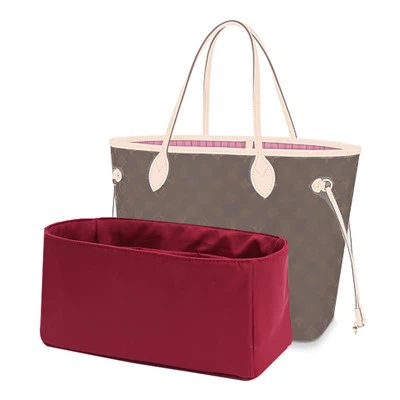
People who love bags have a bit of "hardware anxiety" - the zipper pulls are worn, the hanging buckles are faded, and the D ring is full of scratches... Obviously the leather of the bag is still very good, but once the hardware is old, the sophistication of the whole bag will be compromised.
Hardware wear and tear is often caused not by use, but by "rubbing". Keys, power banks, lipstick caps, and even the metal chain on another bag sway back and forth in the bag, causing irreversible wear and tear over time.
When designing our inner bags, we actually secretly hide a few "hardware protection" tips. Let's talk about them today.
1. Partition hard objects and isolate them from the source
The biggest enemies of hardware are keys and small hard objects. The multi-compartment design of the liner bag essentially creates a "safety zone" and an "isolation zone" in the bag.
Put keys, coins, nail clippers and other "little assassins" into the zippered side pockets and seal them.
Put your mobile phone and power bank into the independent pocket on the other side to prevent the metal interface from repeatedly scratching the inner wall of the bag.
The large warehouse in the middle is reserved for umbrellas and water cups, so that they can stand upright without swaying.
When the items in the bag are in place and the shaking is reduced, the probability of the hardware being innocently implicated is greatly reduced.
2. Soft buffer layer, giving the hardware a "sweater"
Our felt liner bag itself has a certain thickness and elasticity, which is equivalent to adding a layer of soft cushioning to the inner wall of the bag. When the metal zipper puller and shoulder strap buckle on the outside of the bag hang down, they are in contact with the suede or canvas surface of the inner bag instead of directly rubbing against the leather lining of the bag.
Some friends will also use the inner bag in reverse - put precious hardware accessories and watches into the inner bag, and then put the whole into a large bag, which is equivalent to wrapping an extra layer of protection for these items that are afraid of scratches.
3. Change the bag without changing the bladder, reducing the chance of hardware wear and tear
Every time you change a bag, you take out items one by one and stuff them into a new bag. This process itself will cause the edges of the items to repeatedly scratch the bag hardware and zipper. If you use an inner bag, you can directly transfer it by the handle, and the items will not come into contact with the metal parts of the new bag during the entire process.
This method is especially suitable for bags with tight zipper openings. It eliminates the need for bracelets and rings on your wrists to scratch the zipper teeth when you reach into the bag to rummage around.
Bags are our daily companions when traveling side by side. Every scratch on the hardware is actually a trace of daily use. But some traces can be avoided, and we are willing to help you retain a little more of your heartbeat when you first met.